

Hearing loss doesn't need to hold students back. By providing hearing screenings, increasing access to hearing devices, and creating educational resources about supporting affected students, World Wide Hearing is making classrooms around the world more accessible.
LabXchange is excited to welcome World Wide Hearing to our platform! Below, hear from Patricia Duchesneau, program manager at World Wide Hearing, to learn more about the organization's work.
World Wide Hearing is a non-profit organization headquartered in Montreal, Canada, that provides access to affordable hearing aids and hearing care to children and youth in underserved communities in Canada and Low- and Middle-Income Countries (LMICS).
Our mission is to enable better hearing through the provision of affordable hearing aids and services. We use advanced hearing screening and testing technology that enables us to identify hearing loss early and provide hearing aids and services, bringing quality hearing care closer to underserved communities.
Our work ranges from remote communities in Northern Canada to partner-led programs across Low- and Middle-Income Countries. Beyond donating and fitting hearing aids, we focus on lasting impact by strengthening local capacity, training technicians and frontline workers so hearing care can continue well beyond a project’s timeline, especially in settings where audiologists are scarce or unavailable. In recent years, we’ve also expanded our reach by translating key trainings into digital learning content.
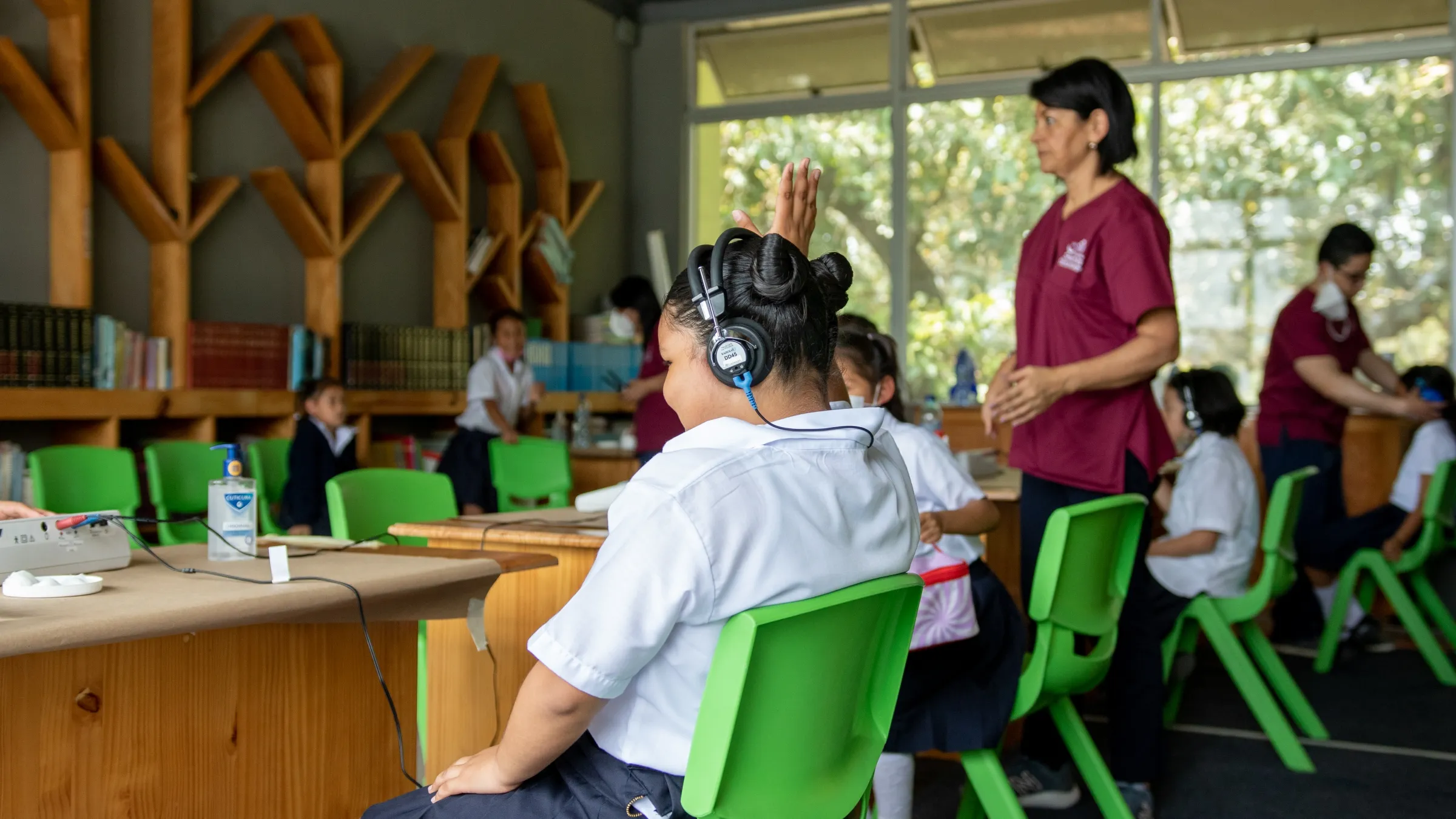
We saw a major gap between knowledge and access: even when solutions exist, like in Canada, people often don’t receive care early enough, especially in low-resource settings. Science education helps close that gap by equipping frontline workers and educators with simple, evidence-informed tools.
What keeps us motivated is seeing how quickly early detection and informed support can change a child’s learning, communication, and confidence.
We’re especially proud of our Hearing Loss at School pathway, particularly the video “How to Improve Listening Conditions at School.” It offers clear, practical strategies that teachers can apply right away to better support children in the classroom. We produced this video because we saw a strong demand for simple, actionable guidance for classroom listening support.
Educators can use the Hearing Loss at School pathway in three ways:
Be and stay curious. Science isn’t only lab work, it’s also listening to communities, testing what works in real life, and improving systems. Build strong fundamentals, seek mentors, and don’t be afraid to combine disciplines (e.g., health + education + technology, etc.). That’s often where the most meaningful innovation happens.
Next, we’re focused on expanding capacity-building content and practical training tools for more advanced audiology training. Tools that strengthen local systems, in Low- and Middle-Income Countries, especially models that support earlier identification and sustainable follow-up care. We also plan to have our teacher-focused resources offered in different languages so hearing health becomes a more routine part of inclusive education worldwide.
Explore all of World Wide Hearing's learning resources on LabXchange!

.svg)

.svg)


