

For educators to achieve the vision of A Framework for K-12 Science Education and contemporary science standards such as the Next Generation Science Standards (NGSS), shifts in classroom instruction and assessment are required. One tool that has been empirically tested to help teachers make sense of these shifts and effectively and efficiently implement them in their classrooms is PIER Investigations, in which "PIER" stands for phenomenon/problem, information gathering, explanation, and reasoning.
The instructional sequence of PIER Investigations integrates the three-dimensional nature of the Framework (i.e., disciplinary core ideas, science and engineering practices, and crosscutting concepts) and provides teachers with the support they need to put students at the center of the sensemaking process. As a result, PIER Investigations enable all students to meet current science standards, such as NGSS performance expectations, that outline what a student should understand and be able to do at the end of science instruction.
Based on the Framework and the NGSS, PIER Investigations are created by Kenneth Huff, a middle school science teacher with over 30 years of classroom experience, NGSS writing team member, and LabXchange Teacher in Residence. PIER Investigations include pathways in physical science, life science, and Earth & space science for middle school students.
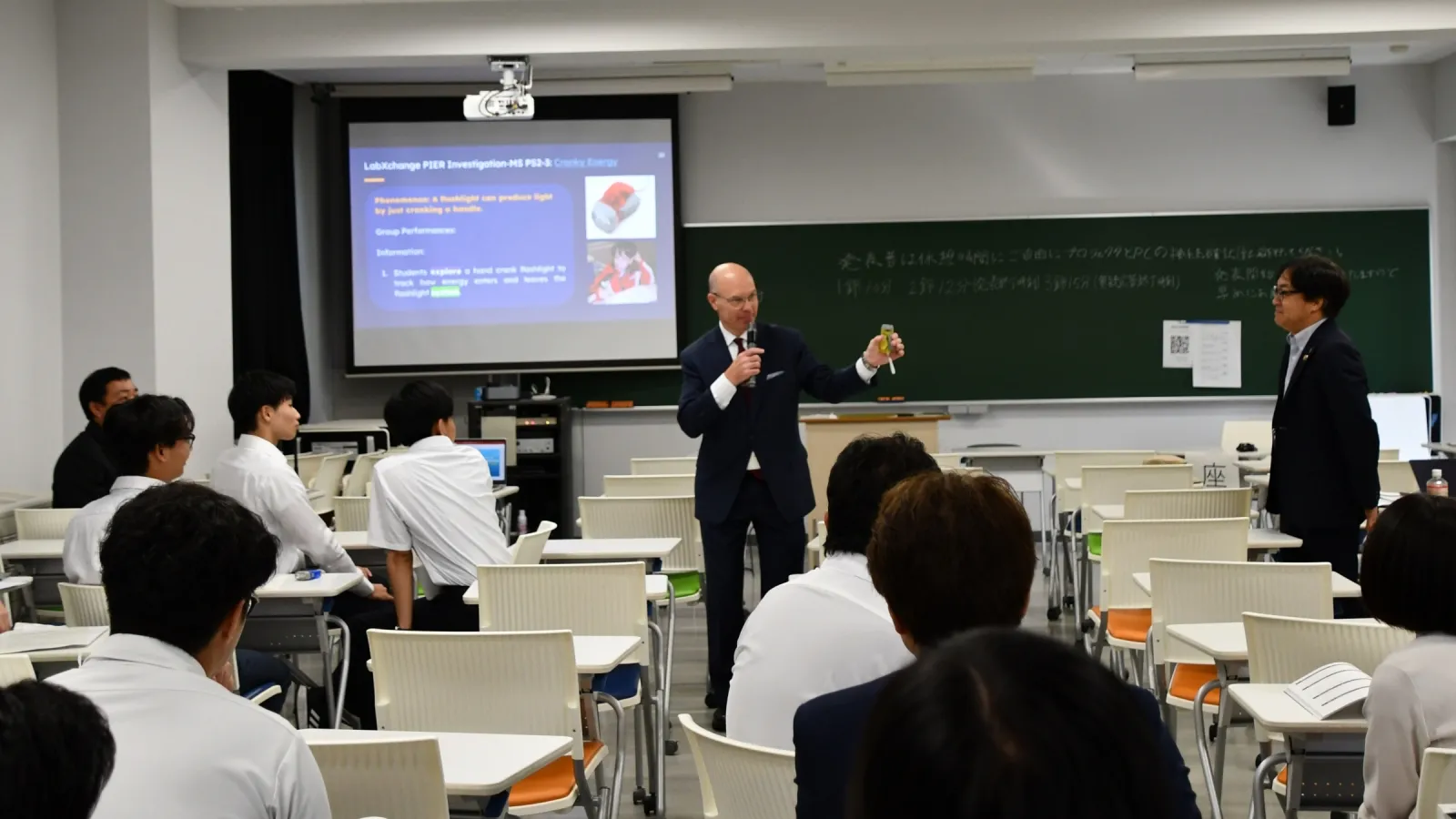
LabXchange began collaborating with Kenneth Huff in 2022 and currently hosts over 170 resources from PIER Investigations on our platform. The entire collection of PIER Investigations resources can be found in our library or on the PIER Investigations organization page.
In addition, PIER Investigations resources have been placed into clusters (collections of content focused on a particular topic or theme) that are made up of pathways (curated lesson plans of content) aligned to specific NGSS standards. Explore the clusters below.
In this cluster, learners will explore space and the solar system, the interconnections among Earth’s various systems, and how humans affect Earth’s systems. A foundational goal for middle school students in learning Earth and space science is to continue to develop understanding about Earth’s various systems and how these systems are interconnected. (Aligned to NGSS standards ESS1–ESS3.)
This cluster aims to develop students' understanding of what everything is made of and why things happen, as well as how light and sound transfer energy and signals transmit information. A foundational goal for middle school students in learning physical science is to continue to develop understanding of the interactions of matter and energy. (Aligned to NGSS standards PS1–PS4.)
This cluster focuses on the unifying principle that cells are the basic unit of life, organisms' interactions with each other and their physical environments, the flow of genetic information between generations, and the changes in populations over time leading to species unity and diversity. A foundational goal for middle school students in learning life science is to continue to develop an understanding of how all organisms are related by evolution and how this process has caused diversity in the biosphere. (Aligned to NGSS standards LS1–LS4.)
Read more about Kenneth Huff's work with LabXchange:

.svg)

.svg)


