

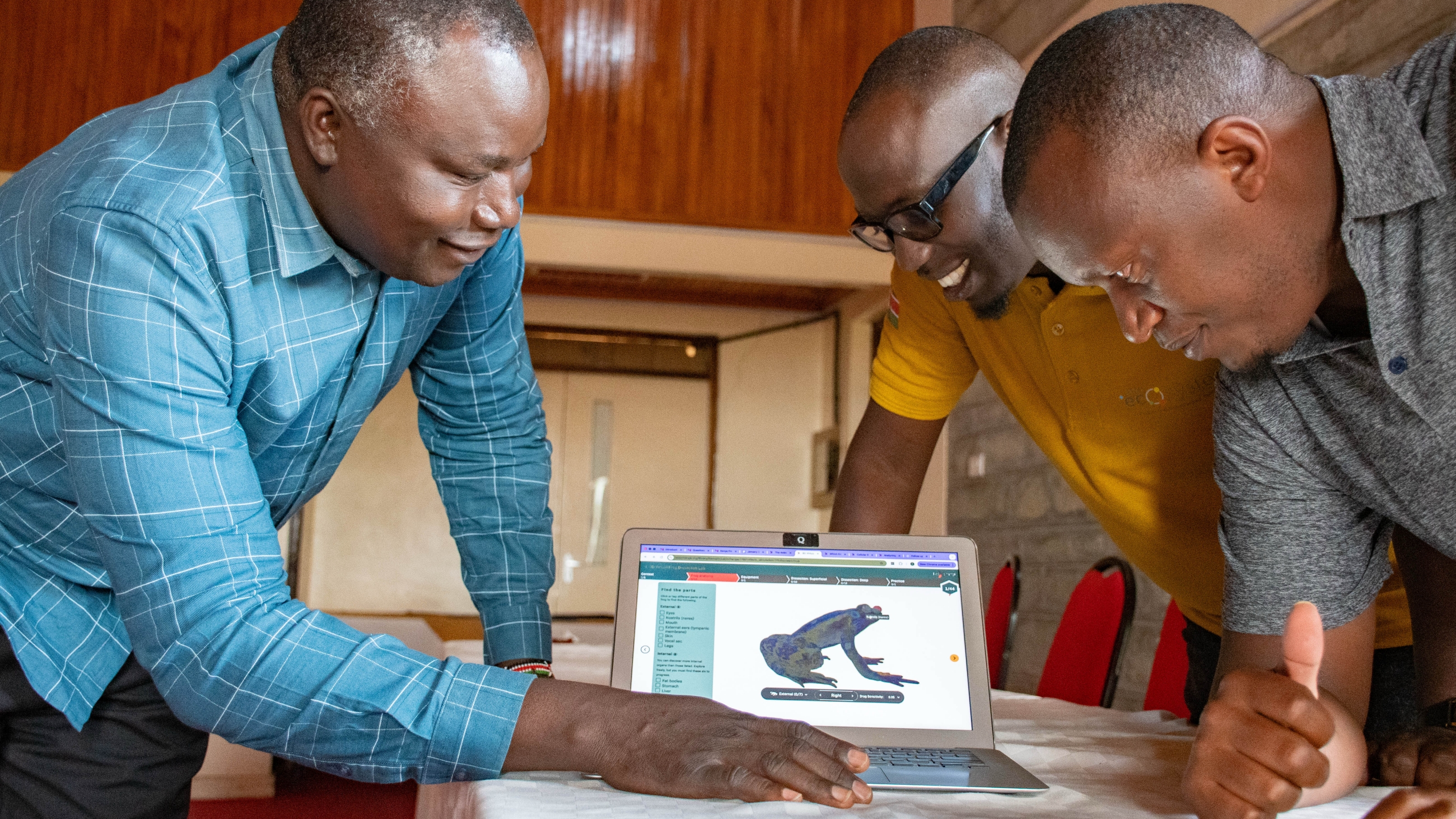
At St. Francis Girls’ High School in Machakos County, Kenya, Shallom Sila’s chemistry students had just finished watching metals react with acids and water. They wanted to see the next ones: sodium and potassium.
As anyone familiar with the explosive properties of those two elements might know, that reaction is too dangerous to perform in a school lab. So Sila opened LabXchange instead. “They were able to see the reaction and how explosive it was and how the fire lit up, and they were so excited,” he says. “LabXchange is helping us to do what cannot be done in a normal classroom setup.”
In many Kenyan schools, the problem goes beyond dangerous experiments. “There are no labs in the junior schools,” says Stephen Kangethe, a head of department at Kiburia Girls Secondary School. “In most of the rural schools, they don’t have laboratories.”
In 2023, LabXchange and a small group of Kenyan teachers set out to improve access to high-quality STEM education resources, and now the work has spread across the country, reaching over 40,000 teachers as of October 2026.
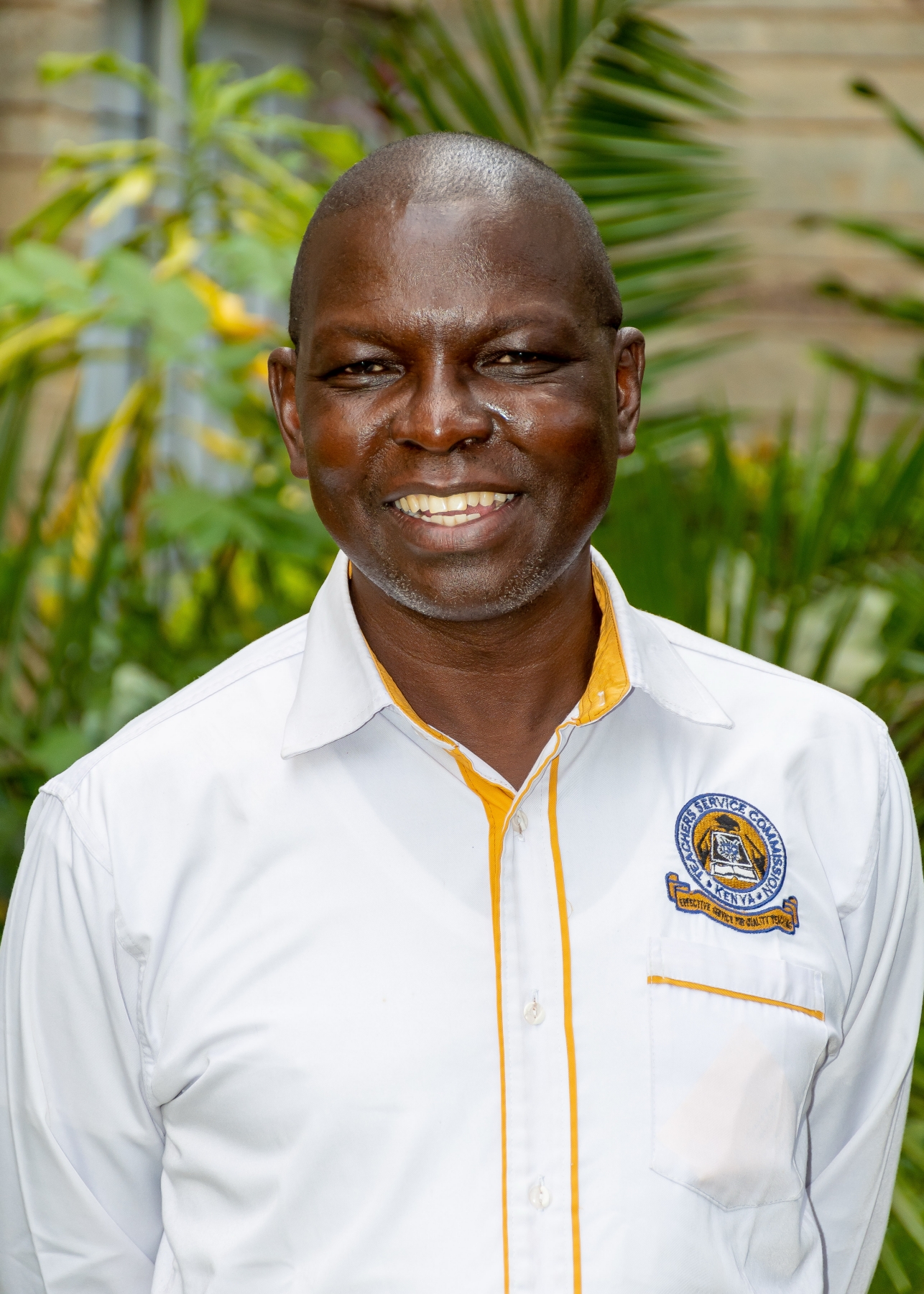
The partnership began in 2023, when Dr. Tom Okaya learned about LabXchange and its free virtual labs and simulations. He is a physics and mathematics teacher who now works at Kenya’s Teachers Service Commission (TSC) as assistant director in charge of education technologies and remote learning methodologies.
Supported by the Amgen Foundation, LabXchange is a free online STEM education platform based at Harvard University. It offers 34,000 learning resources from more than 200 collaborators, including Khan Academy and Teach For All, and has reached 75 million educators and learners worldwide.
“We came to start a virtual program with [LabXchange] in 2023,” Dr. Okaya recalls. Working with the Kenya National STEM Learning Ecosystem, he recruited a group of volunteer “Invention Educators”: teachers who were “passionate about solving problems in their community and in the country, exploring new digital tools, and bringing those tools to their schools.”
The timing couldn't have been more perfect. Kenya was moving from its exam-focused 8-4-4 system to a Competency-Based Curriculum. Junior secondary classes were moving into primary schools, which mostly have no physical labs. LabXchange's virtual labs offered a way to keep interactive, hands-on science going.
From August to December 2023, the first cohort of 18 ambassadors trained with the LabXchange team, led by Andrew Minor, who manages LabXchange’s Teacher Ambassador Program and helps grow LabXchange’s audience around the world. The ambassadors learned through four virtual workshops and an in-person content workshop, working toward a goal of designing curriculum-aligned lessons in biology, chemistry, physics, and integrated science, built around LabXchange simulations.
The new ambassadors didn’t wait long to share what they’d learned. On September 28, 2023, they joined LabXchange in a professional learning session for more than 2,000 Kenyan educators. The focus was improving access to virtual lab simulations.
The teachers in the cohort brought with them deep classroom experience. It included a chemistry teacher with 28 years in the classroom, a national Teacher Award runner-up, and science fair mentors whose students had won at national exhibitions. Several were already county teacher trainers.
Their early feedback showed what LabXchange's virtual labs could do:
“In the absence of science equipment in the labs to conduct experiments, simulations have come in handy to help make teaching and learning experiences interesting.”
—John Adede Omuga, secondary physics and chemistry teacher
“It has enabled me to cover much more within a limited timeframe and made my lessons more interactive.”
—Sandagi Joseph Jaleha, secondary chemistry teacher
That fall, Minor represented the LabXchange team at the Teach For All Global Conference in Nairobi. More than 600 educators from over 60 countries attended. The trip left a lasting impression: Kenya's teachers are resilient and resourceful.
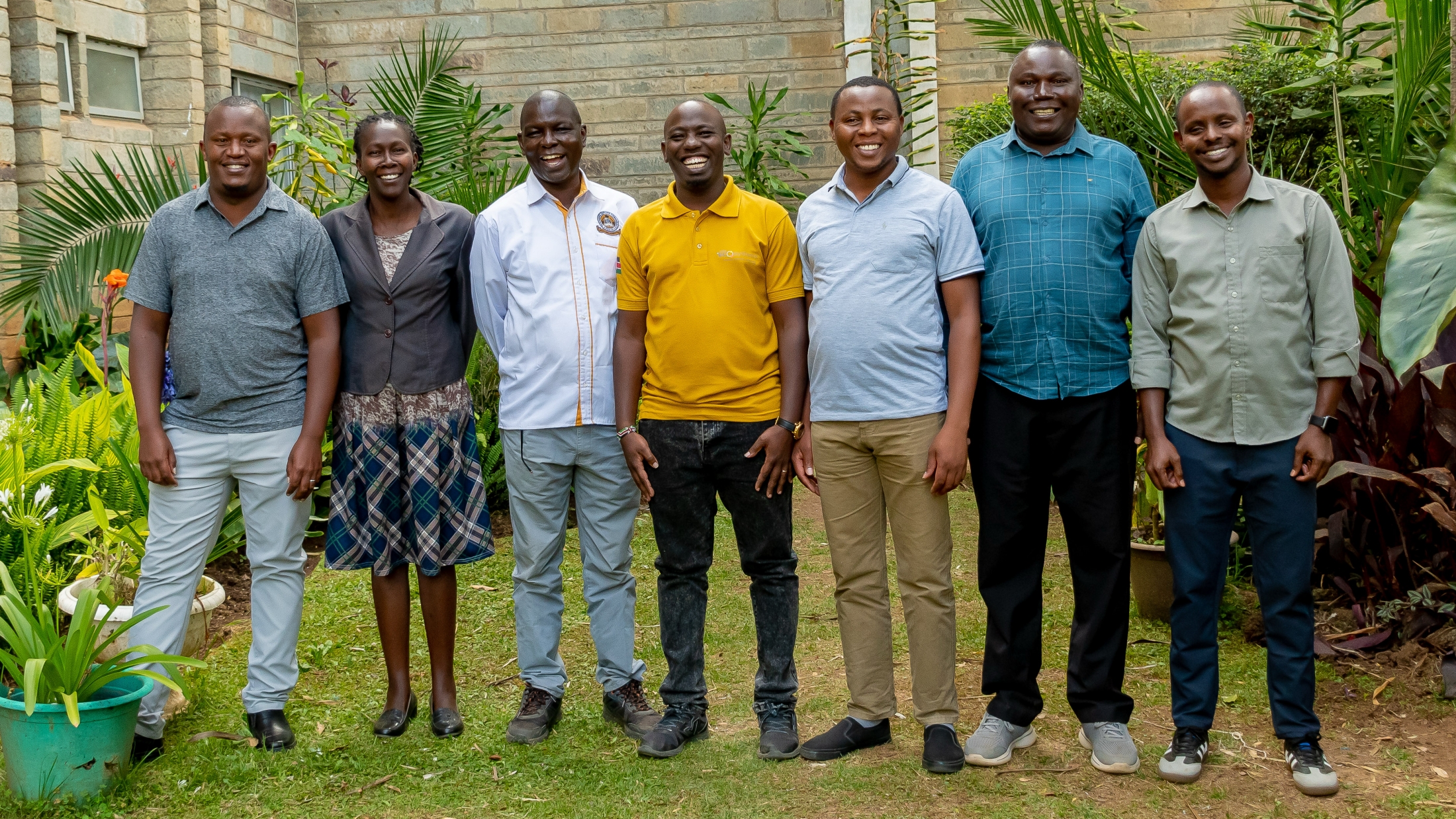
The ambassadors’ real impact came after the first training ended. Each teacher became a trainer themselves, and the people they trained went on to train others.
Dr. Okaya built a three-tier cascade. “I train, they train, and then the last group trains at the school level,” he explains. Through this system, master trainers from all of Kenya's 47 counties learn first, then train county and school-level trainers, who reach classroom teachers. LabXchange training was introduced into the government’s continuous capacity development programs for teachers as an intervention, reaching about 100 teachers in every county, including special needs educators.
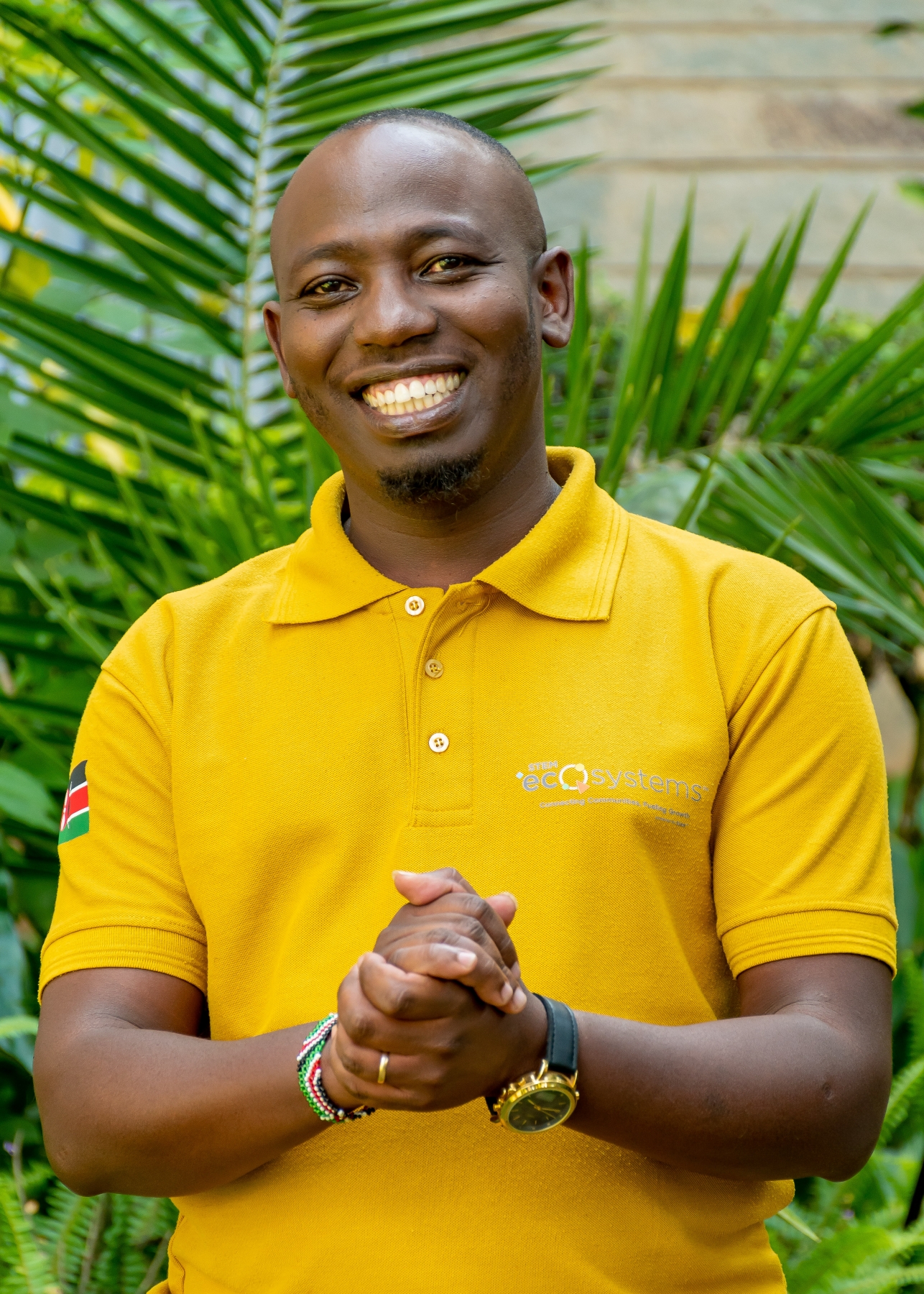
Dr. Okaya noted that, as of January 2026, they had "trained more than 35,600 teachers on the LabXchange platform, including 1,170 Curriculum Support Officers.” Now, 10 months later, as trained teachers train even more teachers, the cascade effect has added more than 6,200 individuals and brought the total teachers trained through the program to nearly 42,000.
The Teacher Ambassador program itself has grown to 78 teacher ambassadors across the country, and a select number of these ambassadors, like Jepkosgei Chemoiwa and Shallom Sila, have themselves trained over 1,000 educators to use the platform.
Much of this happened at the grassroots. “After the 18 of us were trained, we’ve mostly volunteered and used our own resources,” Sila says. Ambassadors would “gatecrash events where teachers are gathered, and ask for an hour or two to tell the teachers about this amazing experience.” Some head teachers now invite Sila to train their staff directly, and teachers’ reactions are consistent in that they “wonder where this platform has been all these years.”
The ripple reaches beyond science teachers. Fayo Omar Bonaya is deputy principal of Garbatula High School in Isiolo County, in Kenya’s remote north. Bonaya teaches English and literature, yet still trains science teachers on LabXchange. “Even a teacher like me, a teacher of English, can step in and help STEM learners because the contents are there.”
Building on the first cohort from 2023, LabXchange held another information session for Kenyan teachers in January 2025. Two more Kenya cohorts followed: one trained in July 2025 and a second in November and December 2025.
Each cohort follows the same model:
Master teacher ambassadors take on a larger role. They review pathways, support training, and help collect data on how LabXchange is being used in-country.
At the April celebration for the 2025 cohorts, ambassadors spoke about what comes next. One pointed to Kenya’s teacher digital literacy gap and how TSC is using LabXchange to help close it; another described using LabXchange to keep teaching students virtually over school holidays.

Master trainer Beth Njeri teaches biology and chemistry and was part of the 2023 Kenya teacher ambassador cohort. While teaching, she recognized that some microscopic concepts never clicked on a chalkboard, like DNA unzipping and re-twisting. Then she showed her class a LabXchange animation that brought the concepts to life. During a cell division lesson, watching chromosomes move, her students said, “Teacher, this is what you tell us!”
Njeri projects simulations from her own laptop because her students don’t have individual devices yet, but she has still seen grades climb. Students have moved from D to C and from C to B, and those who hovered between B and C have settled at B. “I love LabXchange,” she says. “It has changed my teaching.”
Other ambassadors describe the same shift from telling to showing:
For Shallom Sila, the value is having everything in one place, in class and out of it:
“LabXchange came as a game changer for us. We’re now able to reach our learners virtually, and during face-to-face classes we can use the simulations, videos, and resources, all brought together in one platform.”
Students notice the difference, too. “They’ve done it in a way where it allows you to make mistakes,” says student Jayden Korir. “It will tell you the consequences of those mistakes... which is very helpful to learners.”
The gender gap in Kenyan STEM education still exists, but is trending in the right direction. Today, approximately one third of students who choose to study STEM at university are women (Kamonjo & Muoria, 2026).
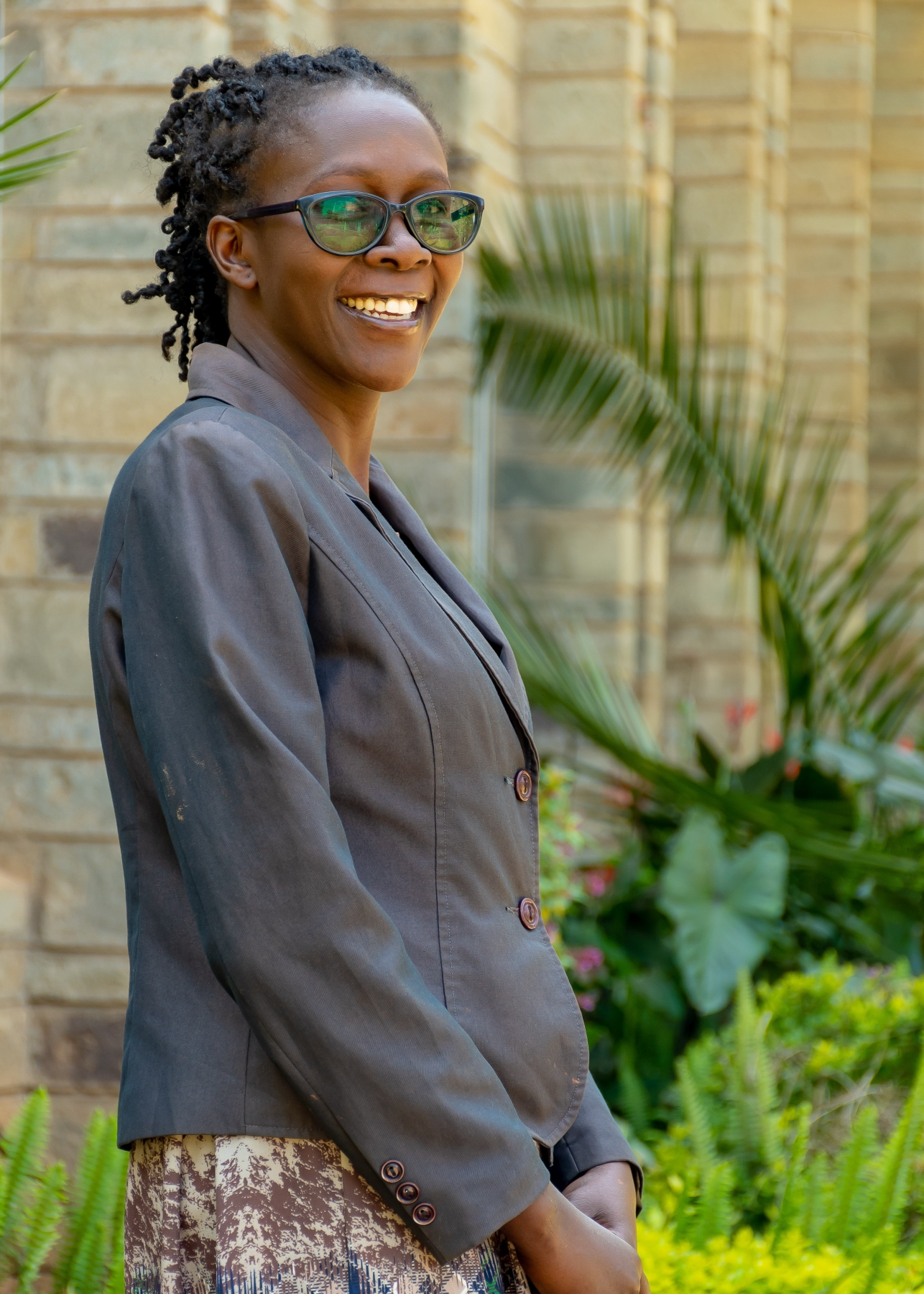
Several ambassadors know the traditional barriers firsthand. “I come from a region in Kenya where learning the STEM subjects in our schools is deemed to be manly,” says Jepkosgei Chemoiwa, who went on to teach physics anyway. When girls see simulations simplify concepts they once thought too hard, she says, “they’ll start having that love for STEM."
At a rural girls’ school where Shallom Sila teaches, many students arrive believing STEM “is not their thing,” but videos by women scientists on LabXchange have helped change that view. And because the platform links classroom science to real careers, Sila says, “it opens up their minds to realize that the world is bigger than their village.”
This perspective shows up in tangible ways. Sila says that STEM uptake “has increased significantly,” and the ripple continues through his students: Two of them, from different schools, credit their teacher—“Mr. Shallom”—with introducing them to robotics.
Beth Njeri carries the same message to her students. Raised in a rural village and first taught science in her local language, Kikuyu, she tells her girls that it is not only a man’s world. After using LabXchange in her teaching, she has even had students who "have chosen to come to STEM because they have realized it is not as abstract [as they thought]."
The ambassadors’ work has drawn continental and global attention:
In August 2026, LabXchange returned to Nairobi for the WODE 2026 convening on career-connected learning and workforce impact. LabXchange’s Andrew Minor and Audra Renyi engaged with attendees through a workshop run by Minor (“Virtual Laboratories for Creativity, Innovation, and Career Growth”) and a keynote presented by Renyi (“From Classroom to Career - Preparing Learners for an AI-Powered Economy”). Speaking with TSC staff, they described LabXchange as already “a household name.”
The ambition now is national scale. Kenya hopes to raise the share of students pursuing STEM pathways from about 22% to more than 60% with their new curriculum. Dr. Okaya sees three steps to get there:
LabXchange is building on that roadmap with Kenyan partners. Plus, the integration of CareerXplorer, LabXchange’s science career exploration tool, aims to help students find the career path that’s right for them.
“It is a very powerful platform, especially for students in disadvantaged and hard-to-reach areas,” says Dr. Okaya. “It is the system that Kenya needs.”
It all started with 18 teachers who had enthusiasm for science and for their students. Master trainer Kizito Simiyu believes “LabXchange cascaded to many teachers in the country” and will “revolutionize and increase the uptake of STEM subjects.” Sila puts it more simply: “It’s the present and the future of STEM.”
Want to help us reach the next 40,000 teachers? Learn about the LabXchange Teacher Ambassador Program, explore free simulations in the LabXchange library, or reach out to us at collaborate@labxchange.org!


