

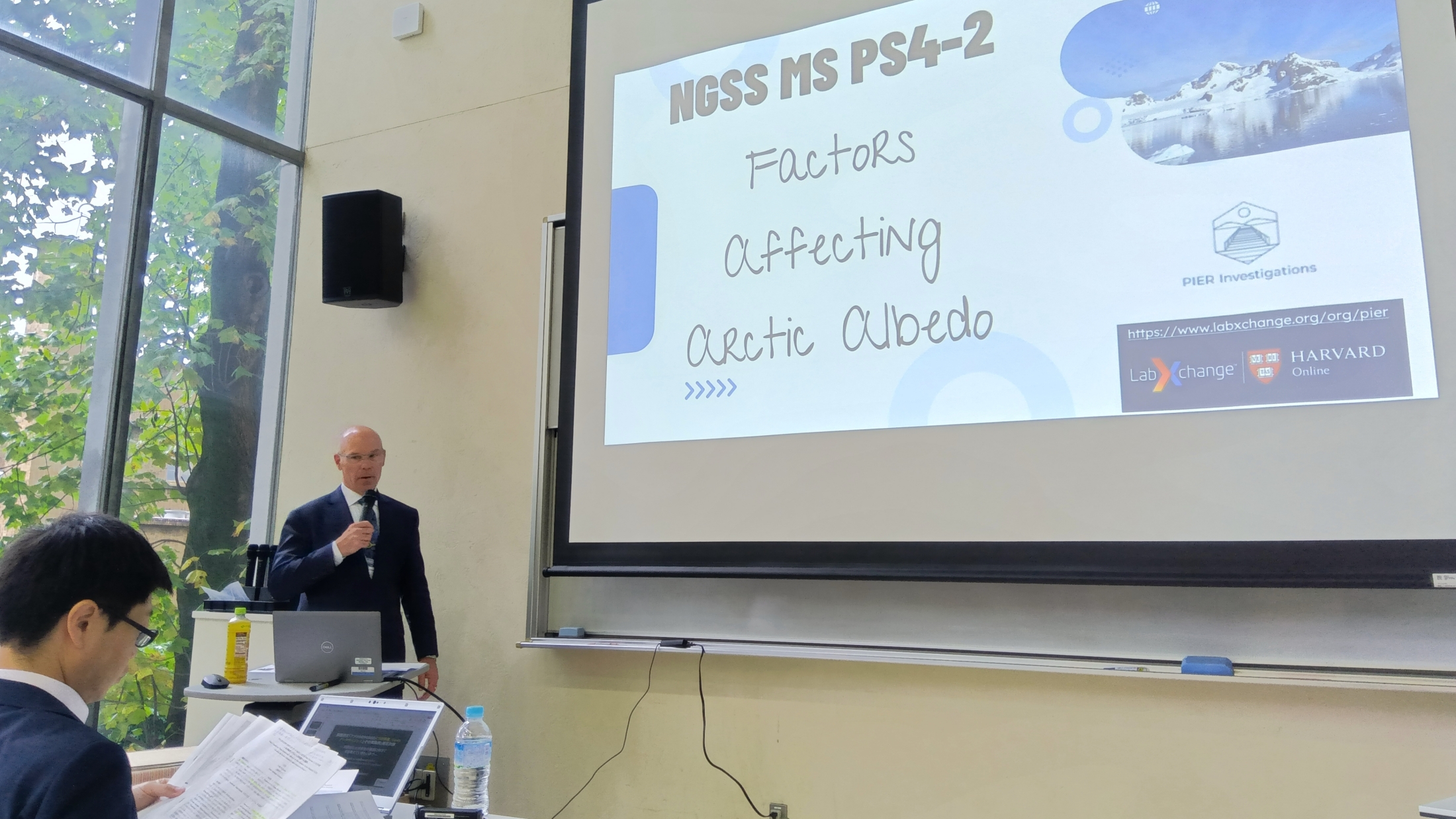
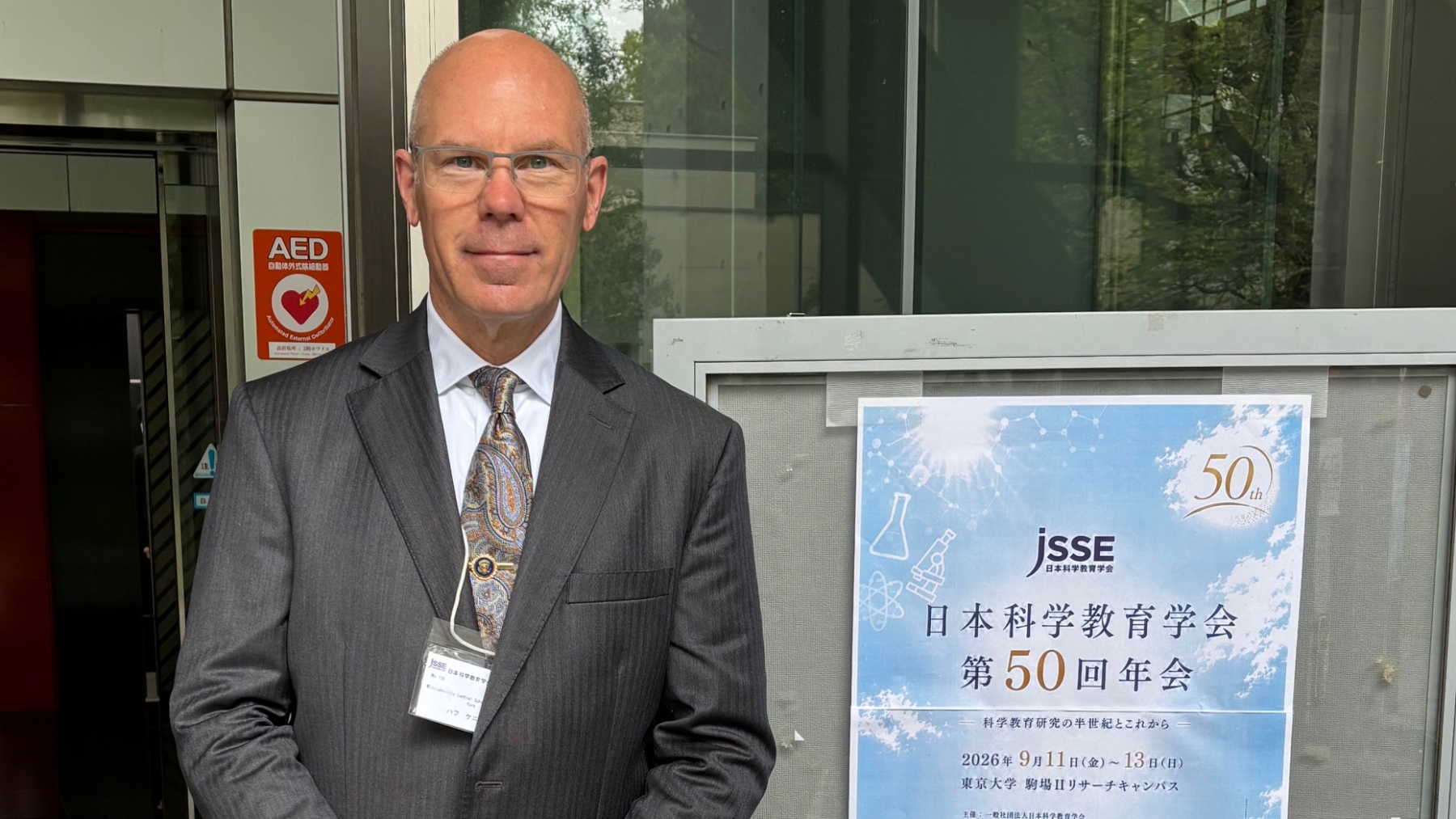
The Japan Society for Science Education (JSSE) hosted its 50th anniversary conference on September 11-13, 2026, at the University of Tokyo in Tokyo, Japan. The conference brought together science and mathematics education researchers, professors, and classroom practitioners from around the world, as well as junior and high school students from Japan, all focused on the theme of “Half a Century of Science Education Research and What Lies Ahead”. LabXchange was also present!
LabXchange Teacher-in-Residence Kenneth Huff attended the conference and presented a PIER Investigation developed for the Next Generation Science Standards (NGSS). Huff’s presentation, titled “How to Successfully Incorporate Data Science Learning Progressions Into NGSS Investigations: A Teacher’s Perspective,” highlighted how the NGSS and the data science learning progressions work together to help educators bring data into their classrooms in meaningful ways.
Throughout his presentation, Huff made the point that in today’s data-driven world, contemporary science education involves routinely engaging students in gathering, analyzing, and interpreting data. The NGSS call for students to acquire knowledge and skills in science and engineering through a carefully designed sequence of learning experiences, and data science is integrated into each step of this sequence. However, teachers struggle with how to incorporate data into their instruction in meaningful ways and how best to develop students’ data science practices. With data literacy being an increasingly valuable and necessary skill for employment and active citizenship, this element of classroom instruction is vitally important, and teacher resources in this area are needed.
This message resonated with participants because Japan’s Ministry of Education, Culture, Sports, and Technology is currently working on revisions to its national curriculum standards, known as the Course of Study. Data science and computational thinking are heavily emphasized in these forthcoming standards and overarching national strategies.
One of the conference highlights was the International Luncheon Meeting organized by the JSSE International Exchange Committee, of which Huff is a member. During the luncheon, Professor Yusuke Shinno gave a presentation titled “Why is International Collaborative Research Necessary?” As a result of attending this presentation, Huff gained an awareness that through internationalization of science and mathematics research, an increased number of international conferences and international journals and manuscripts are possible.
Additionally, Huff learned that internal reasons for pursuing international collaborative research should focus on capacity rather than competitiveness. When interests are shared, it is better to research together than in separation. Research work can be divided according to each member's expertise. The diverse expertise from abroad in theoretical frameworks and methodologies can be integrated. External reasons for international collaborative research include networking among researchers leads to an expansion of the research community. Moreover, external reasons include obtaining funding through international research projects.
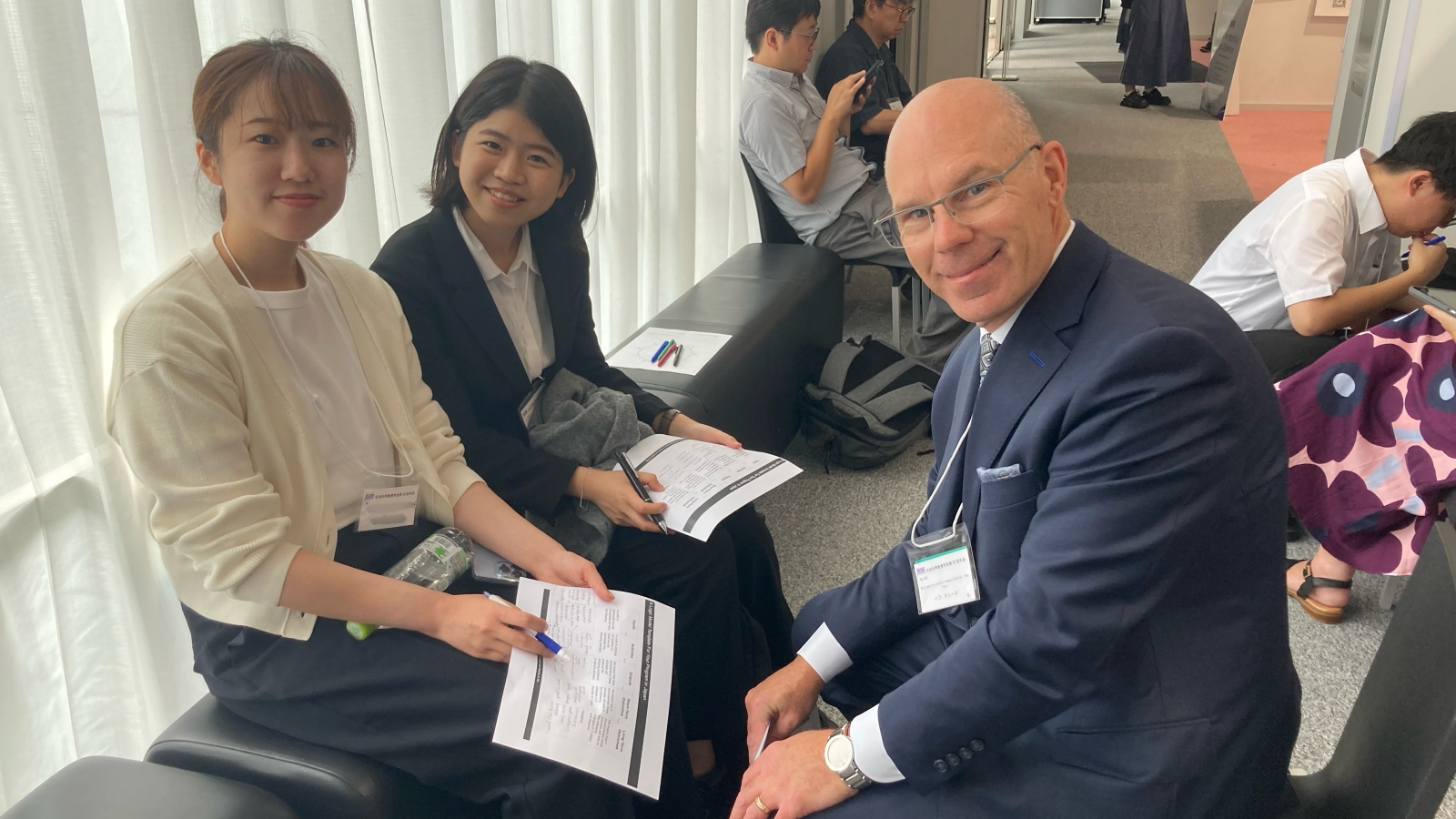
Huff’s main takeaways from the luncheon were that international collaborative research is necessary to understand educational challenges from multiple perspectives. Collaboration among researchers with different cultural and theoretical backgrounds can deepen our understanding of the object of research. This international comparison drives theoretical and methodological development. Enriching and expanding the science education research community leads to networks that can be built through international collaborative research and new collaborative research can be generated.
Responses from luncheon attendees included: “Hearing from several teachers about the importance of international collaborative research reminded me that it is important to take action in order to create opportunities for collaboration with people from overseas” and “ I think there are very few opportunities in Japan for junior and senior high school students to talk with adults on equal footing, so this was a valuable and meaningful opportunity. Since there is also data suggesting that junior and senior high school students tend to experience lower self-esteem and self-affirmation during this period, I felt that the experience of talking with people different from those they usually interact with at school and of being acknowledged by others would become a precious asset."
STEM education actors in Japan continue to express interest in LabXchange resources. In addition to the in-person presentation at the JSSE conference, several webinars highlighting LabXchange resources have been presented to university students in Japan.
We are incredibly thankful to Kenneth Huff for representing LabXchange at the 2026 JSSE conference! We look forward to having a presence at the 2027 JSSE conference, to be held September 3-5 in Matsue, Japan, at Shimane University.

.svg)

.svg)


