

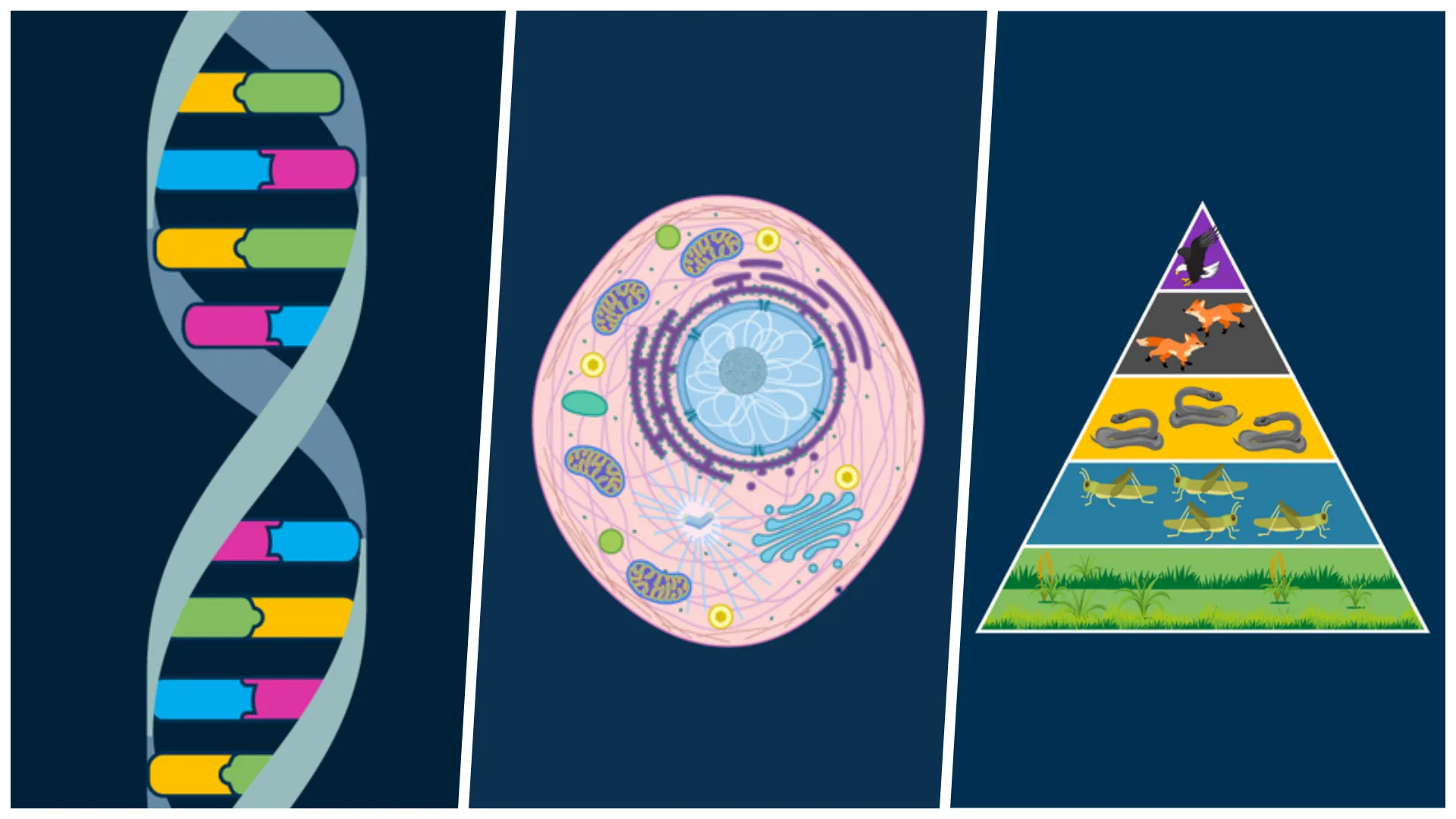
As classrooms across the United States prepare for the upcoming AP® Biology exam in May, LabXchange is here to help!
With three new clusters focused on AP® Biology–aligned content, including over a dozen virtual lab simulations designed with objectives from the AP® Biology lab manual in mind, the resources are well-positioned to support educators in preparing their learners for the exam.
Read more about the AP® Biology–aligned content here, or jump directly into the resources on LabXchange:
Curious how to use these resources in your classroom? We spoke to two of the LabXchange teachers-in-residence involved in the development of these AP® Biology–aligned resources, Stefana Dunn and Angela Campbell, to learn more about how they recommend using the content. Read the interview below!
Angela: Because LabXchange assets are designed to align with the AP® Course and Exam Description (CED), they provide additional support that reinforces classroom instruction. Their mix of simulations, scrollables, and visuals helps students better understand complex concepts across all eight AP® Biology units.
Angela: Yes, while they are designed for AP® Biology, many resources can be adapted for honors or pre-AP® courses. Simulations completed at level 1 and foundational text/image assets can help build background knowledge, making them useful for students who are not yet at the AP® level or need additional support.
Stefana: Many of the resources can also be used in advanced high school biology courses or introductory college-level biology courses. Teachers can adapt how they use the materials to meet their students’ needs, including using visuals and interactive content to support learning. The lab investigations are closely aligned with the skills and standards in the AP® Biology lab manual, so they are best suited for AP® Biology or introductory college-level courses.
Angela: Students should have a basic understanding of life science concepts, especially for more advanced materials. However, many resources are designed to build foundational knowledge, making them accessible to learners with varying levels of experience.
Stefana: Pathways are designed to comprehensively cover AP® Biology standards in a logical, chronological sequence and at an appropriate depth. Each pathway allows students to engage with interactive content at their own pace, practice in a low-stakes environment, and receive targeted feedback based on their misconceptions. Several pathways comprise an AP® Biology unit. Formative and summative AP®-style question sets are embedded throughout each pathway to support student learning and monitor progress. These questions assess content that has been previously introduced and provide personalized feedback based on students’ answer choices.
While the resources are organized into cohesive learning pathways, each component can also be used independently. Teachers can incorporate these materials into classroom instruction, homework, group work, or lab investigations to support student learning in flexible ways.
Angela: I have personally used the resources as make-up labs, alternatives when in-class labs are not feasible, or as supplemental materials embedded in platforms like Canvas. They are especially useful for reinforcing concepts, previewing lessons, and ensuring students still gain key lab skills.
Stefana: There are many ways I would use these resources with my students. The virtual simulations are especially useful for pre-lab experiences and as make-up opportunities for students who miss lab days. They also provide valuable additional practice for students preparing for lab practicals. The pathways are designed to scaffold learning with the same level of detail, scope, and sequence as the AP® Biology units, covering the standards comprehensively. I would use much of this content in a flipped classroom approach, assigning some materials as homework and using interactive elements to support classroom instruction in class. The interactive features and visuals would also help make the content more accessible for my students. In addition, I would incorporate the available summative and formative question sets into test preparation, since students are always looking for more opportunities to practice AP®-style questions.
Angela: They provide strong opportunities for review, reinforcement, and remediation. Students can revisit challenging topics, fill in gaps from missed content, and strengthen their understanding in preparation for the AP® exam.
Stefana: When students are preparing for the AP® exam in May, they can use a robust platform that organizes all of the content in a clear, comprehensive, and chronological way, with embedded question sets in each pathway. These AP®-style practice questions emphasize application and data analysis and provide feedback and explanations for incorrect answers, helping students deepen their mastery of the content.
Angela: The Protein Folding interactive and the Mitosis and Lectin lab simulation stand out. They offer clear, visual representations and hands-on experiences that help students grasp complex processes and lab skills, while also supporting concept reinforcement.
Stefana: The BLAST virtual lab. Historically, this has been a challenging lab to teach in person due to the complexity of sequence comparisons and the large volumes of data involved in genomics. This resource breaks down a highly complex bioinformatics topic into an interactive and engaging experience that is more accessible for students.
Angela: Start by previewing and completing the lab investigations to ensure alignment with learning goals and to make you comfortable with what your students will be doing. I recommend in the beginning using the lab investigations to supplement or preview hands-on labs, encouraging student reflection after use to identify learning gaps and reinforce understanding before completing the actual lab in class.
Stefana: The virtual investigations are especially useful for pre-lab experiences and as make-up opportunities for students who miss lab days. In addition, these simulations provide valuable extra practice for students preparing for lab practicals. They are also ideal for labs that would normally take weeks to complete in a classroom, or for labs where equipment is too expensive for the typical school budget.
Angela: Start small and choose resources that directly support your objectives. Avoid overwhelming students, guide them through the materials, plan for potential technical issues, and always follow up with discussion to reinforce learning.
Stefana: Start by trying a few simulations, interactives, and question sets with your students—you’ll quickly see how much they enjoy the low-stakes, self-paced approach to practicing complex AP® Biology concepts. These resources can reduce lab preparation time, provide effective options for make-up work, and create more engaging homework and review opportunities. Over time, you can integrate them more intentionally into your instruction, using them to reinforce difficult topics, support differentiated learning, and give students additional practice with AP®-style questions.
AP® is a trademark registered by the College Board, which is not affiliated with, and does not endorse, this content.

.svg)

.svg)


