

Discover how human activities are shaping Earth’s future in Data Science and Earth Science, a new cluster created through LabXchange's Data Science–Driven Science Education (DSDSE) project.
In six engaging pathways exploring the intersection of data science and Earth science, learners will use data science tools such as spatial analysis, predictive modeling, and time-series analysis to investigate climate change, pollution, resource use, and biodiversity loss. In doing so, they will develop and practice the skills of analyzing, interpreting, and communicating environmental data.
In addition to videos, texts, infographics, and interactives, the Data Science and Earth Science cluster includes a new type of LabXchange simulation: the spreadsheet simulation. In spreadsheet simulations, learners work directly with data to perform analyses in realistic scenarios using realistic tools and processes, improving their data literacy and building data analysis skills that are directly transferable to real-world applications.
Explore the six pathways in this cluster below, or check out the full cluster here.
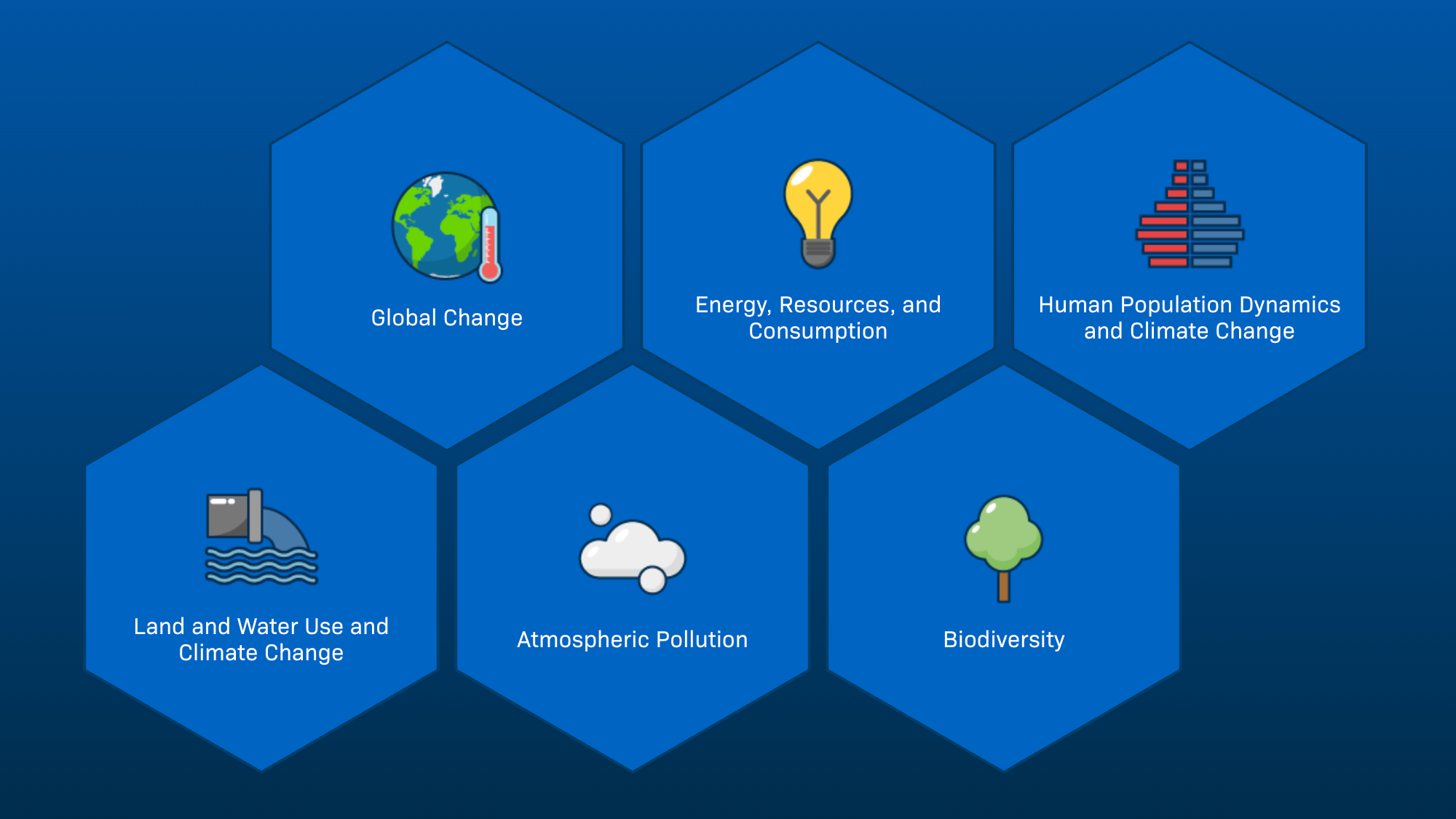
This pathway describes and explains global changes in the environment, the causes of these changes, and their consequences. Learners will be asked to explain and evaluate the cause and effect of climate change on a global spectrum using environmental science and data science principles.
This pathway examines human use of renewable and nonrenewable energy sources and how energy use differs throughout the world in resource availability, consumption, and environmental impact. Students will practice sourcing real-world energy consumption data, unit conversion, dimensional analysis, and statistical analysis.
Explore the interconnected dynamics of human populations and climate change through a series of articles, simulations, and data-driven activities. In this pathway, learners investigate population growth and demographic change, use predictive modeling and correlation analysis to interpret data, and examine potential impacts on populations, climate, and resources.
How can data drive sustainable environmental decisions? In this pathway, explore how land and water use, pollution, urbanization, and climate change affect ecosystems while using GIS, remote sensing, and environmental data to investigate real-world challenges and evaluate sustainable solutions.
In this pathway, learners identify patterns and predict trends in atmospheric pollution using graphs and tables. They explore how data communicates environmental concepts, including types of air pollution, impacts on ecosystems and human health, changes over time, and the testing hypotheses about the causes and consequences of pollution and climate change.
This pathway explores the richness and diversity of life on Earth and the impacts of environmental changes on these complex systems. Using cluster analysis, learners assess the health and resilience of different ecosystems under changing environmental conditions.
Explore more clusters in the LabXchange library, including Data Science and Biotechnology from the DSDSE project!

.svg)

.svg)


