Engage your students with a fun, drag-and-drop virtual lab!
- Explore how energy moves through ecosystems using a model system of caterpillars and Brussels sprouts
- Measure how much energy is stored as biomass
- Work with randomly generated data, so every run brings new results to analyze
- Examine how shifts in energy availability influence population survival and community structure
- Practice real data analysis skills in a safe, virtual environment
- Helpful feedback at every step to support learning


HS-LS2-4 – Use mathematical representations to support claims for the cycling of matter and flow of energy among organisms in an ecosystem. [Clarification Statement: Emphasis is on using a mathematical model of stored energy in biomass to describe the transfer of energy from one trophic level to another and that matter and energy are conserved as matter cycles and energy flows through ecosystems. Emphasis is on atoms and molecules such as carbon, oxygen, hydrogen and nitrogen being conserved as they move through an ecosystem.] [Assessment Boundary: Assessment is limited to proportional reasoning to describe the cycling of matter and flow of energy.]
HS-LS2-3 – Construct and revise an explanation based on evidence for the cycling of matter and flow of energy in aerobic and anaerobic conditions. [Clarification Statement: Emphasis is on conceptual understanding of the role of aerobic and anaerobic respiration in different environments.] [Assessment Boundary: Assessment does not include the specific chemical processes of either aerobic or anaerobic respiration.]
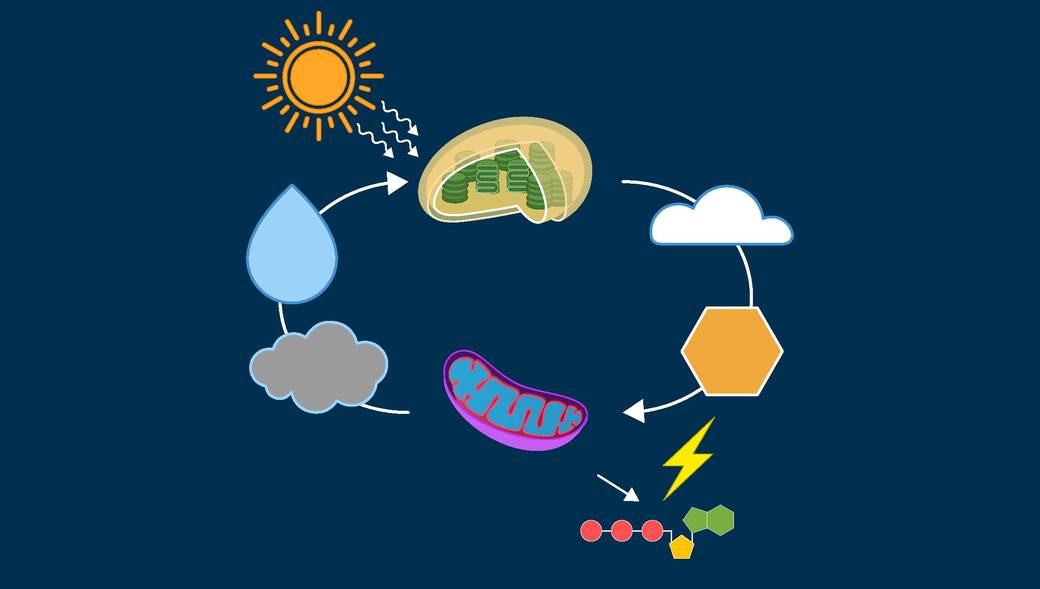
HS-LS1-7 – Use a model to illustrate that cellular respiration is a chemical process whereby the bonds of food molecules and oxygen molecules are broken and the bonds in new compounds are formed, resulting in a net transfer of energy. [Clarification Statement: Emphasis is on the conceptual understanding of the inputs and outputs of the process of cellular respiration.] [Assessment Boundary: Assessment should not include identification of the steps or specific processes involved in cellular respiration.]
HS-LS2-2 – Use mathematical representations to support and revise explanations based on evidence about factors affecting biodiversity and populations in ecosystems of different scales. [Clarification Statement: Examples of mathematical representations include finding the average, determining trends, and using graphical comparisons of multiple sets of data.] [Assessment Boundary: Assessment is limited to provided data.]